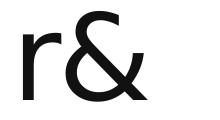
For a growing company, $20 million of aggregated turnover is the most consequential number in the R&D Tax Incentive. Below it, a company that is not controlled by exempt entities gets a refundable offset: it first reduces any tax payable, and the rest is paid out. At or above it the offset only reduces tax payable, with any excess carried forward. Companies near the line need to know exactly how turnover is counted and what crossing it costs.
What counts toward the $20 million
The figure is aggregated turnover, not the company's own revenue. AusIndustry's form defines it as the annual turnover of:
- the company, including every member of its consolidated group;
- any entity connected with the company, which may not be in the consolidated group; and
- any entity affiliated with the company, which may also sit outside it.
Dealings between these entities are excluded, and annual turnover is ordinary income from carrying on the business, without GST. The usual surprises are a founder's other company, a sister company under common ownership, or a foreign parent group; see connected and affiliated entities.
What changes when you cross it
At $20 million or more the offset becomes non-refundable, priced at the company tax rate plus an intensity premium with two tiers: 8.5 points on notional R&D up to 2% of total expenditure, and 16.5 points on the slice above. A company under $50 million whose assessable income is no more than 80% passive can still be a base rate entity taxed at 25%, so its rates are 33.5% and 41.5%.
Two practical consequences. First, the test applies to the whole income year, so a company that crosses $20 million in May loses refundability for the entire year, including R&D done in the first quarter. Second, intensity is measured against the company's total expenditure, a figure the accountant should settle, because it decides how much of the claim sits in the cheaper first tier. Budget for the lower, non-refundable figure in any year turnover could reach the line.
An illustration
A hypothetical company taxed at 25% spends $3 million on eligible R&D in a year with $25 million of total expenditure.
| Calculation | Offset | |
|---|---|---|
| Under $20m turnover | $3,000,000 at 43.5% | $1,305,000, refundable |
| At $20m or more, first tier | $500,000 (2% of $25m) at 33.5% | $167,500 |
| At $20m or more, second tier | $2,500,000 at 41.5% | $1,037,500 |
| At $20m or more, total | $1,205,000, non-refundable |
The value falls by $100,000, but the bigger change is form. If the company is profitable, the non-refundable offset reduces tax it would pay anyway. If it is still in loss, the offset gives no cash that year. The calculator runs your own figures.
The proposed $50 million threshold
Treasury consulted from 10 to 28 September 2026 on an exposure draft that would raise the refundable threshold to $50 million for income years starting on or after 1 July 2028. It comes in one package with a limit on refundability to the years before the tenth anniversary of a company's start day. A company under $50 million past that point would keep the top rate (tax rate plus 23 points, 48% at a 25% tax rate) but as a non-refundable offset, so for an established company the higher threshold may change the rate without bringing back the cash refund. Neither measure is law, and neither affects any year before 2028-29. A company that would cross $20 million before then stays under the current rule. The detail is on the $50 million threshold page, and the 2028 calculator prices both cases from your own figures.
The R&D Tax Incentive statistics page shows how claims split between the refundable and non-refundable offsets today.